
Selling
Should I Sell My Home Before Buying My Next One?
September 23, 2026 · By Ken Finch, Real Estate Broker & Mortgage Agent
It is the first question almost every Oakville homeowner asks me when they start thinking about a move: do I sell my current home first, or buy the next one first? There is no answer that is right for everyone. There is a right answer for you, and it comes from looking at both halves of the move at the same time.
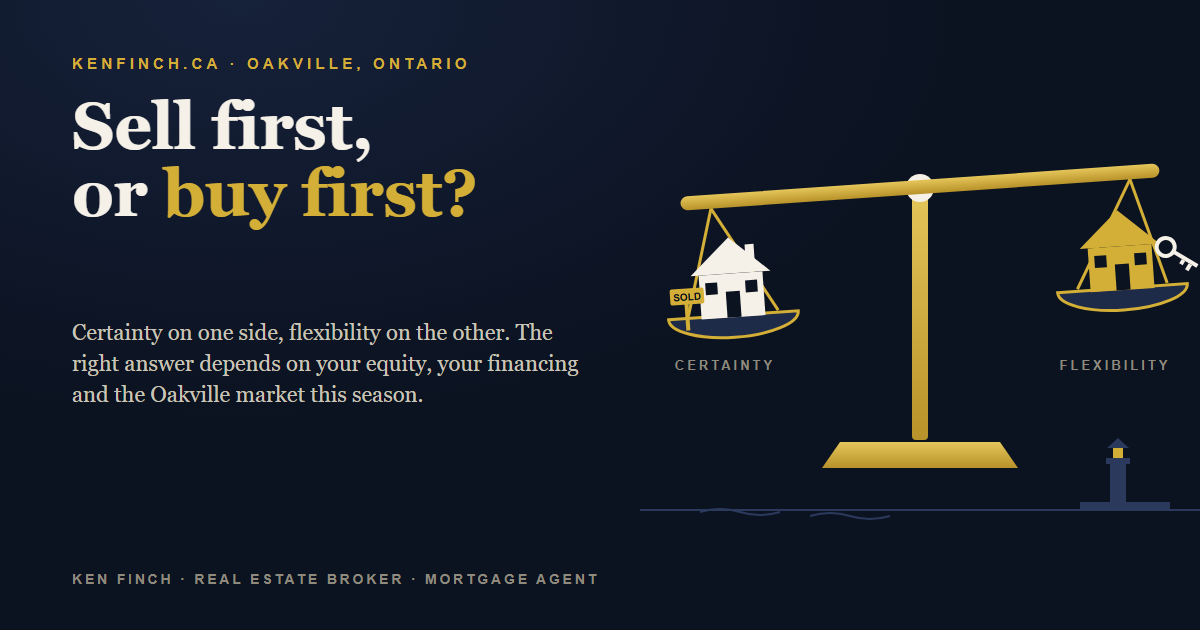
Selling first: certainty
When you sell first, the biggest unknowns disappear. You know exactly how much equity you are walking away with, what your budget is for the next home, and the date your current home closes. You are never carrying two properties at once, and you are never paying two mortgages while you wait for a buyer.
The cost of that certainty is timing. Once your sale is firm, you have a closing date to beat. Some sellers find the right home comfortably inside that window. Others feel pressure to settle for a home that is close enough, or end up arranging a short-term rental and a second move because the dates would not line up. In a market with fewer listings in the neighbourhoods you want, that pressure is real.
Selling first makes the most sense when:
- Your next purchase depends on the sale proceeds for the down payment.
- You cannot qualify for a second mortgage while still carrying the first.
- You have somewhere to land if the dates do not align, such as family, a rental, or a flexible closing.
- The homes you want come up often enough that waiting a few weeks is not a risk.
Buying first: flexibility
Buying first is the move when the right home appears and you do not want to lose it. It also makes the physical move easier: you can take possession, do the painting and the floors, and move in on your own schedule rather than coordinating everything on one day.
Buying first is a financing question before it is a real estate question. You need to know:
- Whether a lender will qualify you for the new mortgage while you still own the current home. Many will count the existing payment against you unless there is a firm sale in hand.
- Where the deposit comes from. In Oakville a deposit is often a meaningful sum, and it is due within a day of the offer being accepted.
- Whether bridge financing is available to you, and what it costs, if the purchase closes before the sale.
- What happens if your current home takes longer to sell than expected, or sells for less than you assumed.
None of these are reasons not to buy first. They are the questions that have to be answered before you write the offer, not after.
What actually decides it
The choice depends on a handful of things specific to you:
- Your home's likely sale price and how quickly it will sell. A well-kept detached home in Glen Abbey in spring sells on a different timeline than a condo in November.
- Your available equity and current mortgage. Some mortgages can move to the new property, some carry penalties, some have a renewal date that changes the math.
- Your income and what you qualify for. This sets whether buying first is even possible.
- Local market conditions this season. In a buyer's market, selling first can leave you waiting. In a seller's market, buying first can leave you carrying two homes.
- What you are buying. A new build with a long closing gives you time. A resale with a 30-day close does not.
Look at both sides before you list or offer
The mistake I see most often is treating the sale and the purchase as two separate projects handled by two people who never talk to each other. The seller's agent prices the home. The mortgage lender qualifies the buyer. Nobody puts the two together until the closing dates do not match.
As both a Real Estate Broker and a Mortgage Agent, I can look at what your current home should sell for, what you qualify for on the next one, and what financing options exist for the gap, all in one conversation. Then the sell-first or buy-first question usually answers itself.
Frequently asked questions
Can I make my offer conditional on selling my current home? You can, but in a competitive situation a sale-of-buyer's-property condition weakens your offer. It is more common when the seller has had the home listed for a while or when the market favours buyers.
How long does bridge financing last, and what does it cost? Typically up to 90 days, sometimes longer, at a rate above a standard mortgage plus a setup fee. It requires a firm sale on your current home. It is a useful tool for a short gap, not a substitute for a sale.
What if I sell first and cannot find anything? Negotiate a longer closing on your sale, ask for a leaseback from your buyer, or plan a short-term rental. The important thing is knowing which of these is realistic before you accept an offer.
Thinking about making a move? Start with a free estimate of what your home is worth today, then contact me and we can work through the numbers before you decide which order to do things in.
Ken Finch, Broker, Royal LePage Signature Realty, Brokerage. Ken Finch, Mortgage Agent Level 1, Licence #M26000634, Canada Express-Mortgage Inc., FSRA Brokerage Licence #13241.
Selling, buying, or both?
Ken handles the sale, the purchase, and the financing as one plan. Start the conversation.
Or get a free AI home valuation firstMore selling guides
Ken Finch, Mortgage Agent Level 1, Licence #M26000634. Mortgage services provided through Canada Express-Mortgage Inc., FSRA Brokerage Licence #13241. Real estate services provided by Ken Finch, Broker, Royal LePage Signature Realty, Brokerage. Independently owned and operated. A mortgage pre-approval is not a commitment to lend. Rates, terms, and approval are subject to lender criteria and may change without notice.